
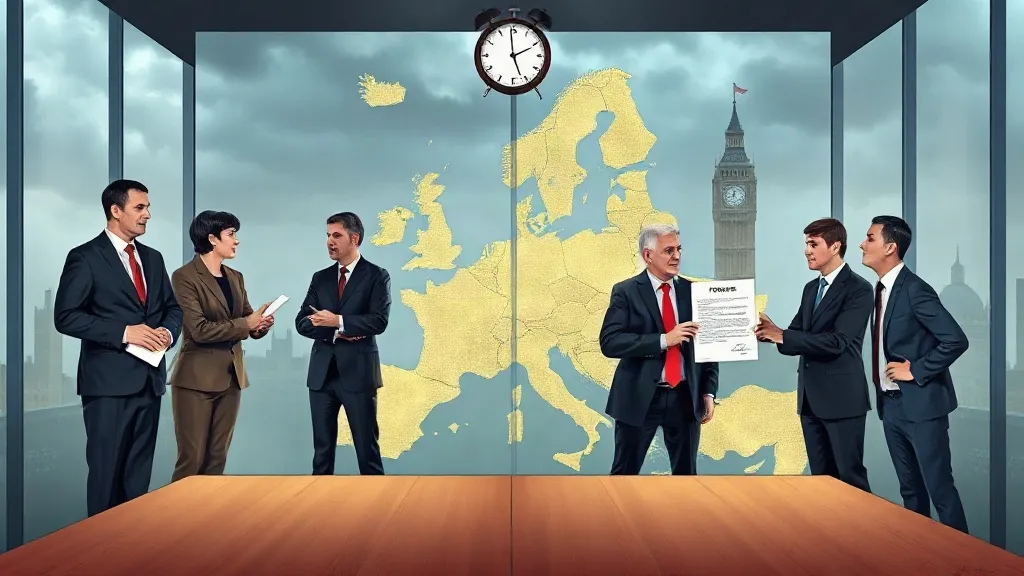
For years, European companies have built their digital operations on a foundation of American technology. From cloud infrastructure to productivity software, US giants have provided the tools that power European businesses. But a shift is underway. Increasingly, European enterprises are questioning how much control they truly have over the technology they depend on, and they are no longer satisfied with reassurances from across the Atlantic.
The latest signal came from a series of high-level meetings between European business leaders and their American counterparts, where European representatives made clear that promises of cooperation and future compliance are insufficient. They want concrete actions, not just words.
The Trust Deficit
At the heart of this discontent lies a growing trust deficit. European businesses have watched as US tech companies have been embroiled in data privacy scandals, antitrust investigations, and disputes over tax practices. Each incident has chipped away at the belief that American tech firms can be trusted to act in Europe's best interests.
"We've moved beyond the phase of polite requests," said one European industry representative, speaking on condition of anonymity. "Now we need to see real change, not just pledges."
This sentiment is echoed across sectors. Banks, manufacturers, and retailers are all reassessing their reliance on US technology, driven by a combination of regulatory pressure and strategic caution.
Regulatory Pressure Mounts
The European Union has been at the forefront of regulating digital markets. The Digital Markets Act (DMA) and the Digital Services Act (DSA) are designed to curb the power of Big Tech and ensure fair competition. But enforcement is key, and European businesses are watching closely to see whether these rules will be applied rigorously.
"The legislation is there, but the proof will be in the implementation," noted a Brussels-based policy analyst. "Companies want to see penalties imposed when rules are broken, not just stern warnings."
For American tech firms, this means that compliance must be demonstrable. It's no longer enough to claim adherence to European laws; they must show it through transparent practices and open audits.
Data Sovereignty Concerns
One of the most pressing issues is data sovereignty. European businesses are increasingly wary of storing sensitive data on US-owned cloud platforms, especially after the Schrems II ruling invalidated the Privacy Shield agreement. The subsequent Data Privacy Framework was meant to address these concerns, but many remain unconvinced.
"We need to know that our data won't be accessed by foreign governments without our consent," said a CIO of a German manufacturing firm. "That's not something we can take on faith."
Some European companies are turning to local cloud providers, while others are negotiating stricter data processing agreements with US vendors. But these are stopgap measures. What businesses really want is a lasting solution that guarantees data protection.
Fair Competition and Market Access
Beyond data, there's a growing frustration over market access and fair competition. European tech companies often find themselves at a disadvantage when competing with US giants, who benefit from scale and deep pockets. The DMA aims to level the playing field by designating certain companies as "gatekeepers" and imposing obligations on them.
But European businesses argue that the gatekeepers still hold too much power. "They control the platforms, the data, and the customer relationships," said the founder of a French SaaS startup. "How can we compete when they can change the rules overnight?"
This is not just about protecting European startups; it's about ensuring that the entire European economy can thrive in the digital age. Dependence on foreign technology is seen as a strategic vulnerability, one that could be exploited in times of geopolitical tension.
The Path Forward: Concrete Steps
So what exactly do European businesses want? The list is long, but several key demands stand out:
- Transparency in data handling: Clear, auditable processes for how data is stored, accessed, and shared.
- Fair licensing terms: No more lock-in through proprietary formats or exorbitant fees.
- Commitment to local investment: US tech firms should invest in European infrastructure and talent, not just extract profits.
- Support for European digital sovereignty: Collaborate on initiatives that strengthen Europe's tech ecosystem, rather than undermining it.
These demands are not unreasonable, but they require a fundamental shift in how US tech companies operate in Europe. It's about moving from a relationship based on dependency to one based on partnership.
What's at Stake for American Tech
For US tech giants, ignoring these calls is not an option. Europe is a massive market, and losing ground here could have ripple effects globally. Already, there are signs that European companies are diversifying their technology stacks, reducing their reliance on any single vendor.
Moreover, the regulatory environment is only going to get tougher. The EU is not backing down from its digital agenda, and other regions are following suit. American tech firms that fail to adapt risk being sidelined.
Some companies are already taking steps. Microsoft, for instance, has announced new data storage options in the EU and has pledged to challenge government requests for data more aggressively. Google has made commitments to interoperability and fair ranking. But these are seen as incremental moves, not the bold action that Europe is looking for.
Conclusion: Actions Speak Louder
The message from Europe is clear: promises are no longer enough. American tech companies must demonstrate through concrete actions that they respect European values, laws, and businesses. The era of blind trust is over; the era of accountability has begun.
For European businesses, this is a moment of empowerment. They are no longer willing to be passive consumers of foreign technology. They want a seat at the table, and they want their concerns addressed. The question is whether American tech will rise to the challenge or risk losing one of its most important markets.
Frequently Asked Questions
What specifically are European businesses demanding from US tech companies?
European businesses are calling for greater transparency in data handling, fair licensing terms, local investment, and support for European digital sovereignty. They want concrete commitments, not vague promises.
How does the Digital Markets Act (DMA) affect US tech companies?
The DMA imposes obligations on designated gatekeepers, such as allowing interoperability and refraining from self-preferencing. Non-compliance can lead to hefty fines, so US tech companies must adapt their practices to comply.
Why is data sovereignty such a big issue?
Data sovereignty concerns stem from fears that foreign governments could access European data stored on US platforms. High-profile cases like Schrems II have highlighted the risks, leading businesses to seek local alternatives or stricter agreements.
Are European companies actually reducing their reliance on US tech?
Yes, many are diversifying their technology stacks and exploring local cloud providers. However, US tech remains dominant due to its scale and innovation, so the shift is gradual.
What can US tech companies do to rebuild trust?
They can start by being more transparent about data practices, investing in European infrastructure, and actively supporting European digital initiatives. Demonstrating a genuine commitment to European values is key.