
The long-awaited trial for the alleged killers of two Australian surfers and their American friend has opened in a Mexican courtroom, bringing a painful chapter back into focus for the families and the global surfing community. Two years after the bodies of Jake and Callum Robinson and Jack Carter Rhoad were discovered in a remote well in Baja California, the three men accused of their murders now face justice. The case, which stunned both Australia and the United States, hinges on testimony that paints a picture of a chance encounter turned deadly.
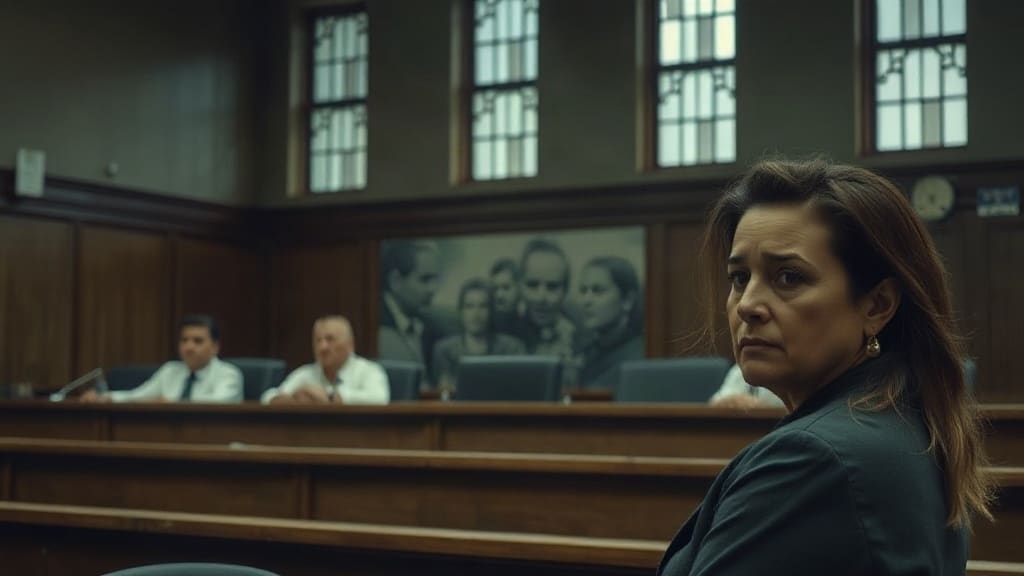
For Debra Robinson, the mother of the two Australian brothers, the trial is a moment she has both dreaded and demanded. She sat in the courtroom, her gaze fixed on the defendants, as prosecutors began laying out their case. The pain of losing two sons in a foreign country, under circumstances that still defy easy explanation, has not faded. Instead, it has transformed into a grim determination to see accountability. "I heard a lot of noise," she recalled of the night her sons disappeared, a detail that now echoes through the legal proceedings as a haunting clue.
The three victims were on what was supposed to be the trip of a lifetime: surfing the legendary breaks of Mexico's Pacific coast. Jake Robinson, 30, a doctor from Perth, and his older brother Callum, 33, a lacrosse player, had joined their American friend Jack Carter Rhoad, 30, for a few weeks of sun, surf, and adventure. They arrived in the coastal town of Ensenada in late April 2024, eager to explore the region's famous waves. But their journey ended in a remote area near Santo Tomás, where their bodies were found in a well, each with a gunshot wound to the head.
The accused—Jesús Gerardo Garcia Cota, his brother Cristian Alejandro Garcia Cota, and their friend Ari Gisel García Cota—were arrested shortly after the bodies were discovered. Prosecutors allege that the three men targeted the surfers to steal their pickup truck, a modified Chevrolet Colorado that was later found burned. The motive, according to investigators, was simple robbery, but the brutality of the crime has left many questioning whether something more sinister was at play. The trial will seek to answer that question, but for the families, no verdict can undo the loss.
The Crime That Shook Two Nations
The disappearance of the three men triggered a massive search effort, with volunteers from both sides of the border joining Mexican authorities. The Robinson family flew to Baja California, desperate for any sign of their sons. Debra Robinson's public pleas for information were broadcast around the world, and the hashtag #FindJakeAndCallum trended on social media. The discovery of the bodies on May 3, 2024, brought a tragic end to that search and ignited a diplomatic conversation about safety for tourists in the region.
Baja California, long a haven for surfers, campers, and adventure seekers, has struggled with cartel-related violence in recent years. The area where the bodies were found is known for its remote beauty but also for its vulnerability to criminal activity. The killings raised uncomfortable questions about the risks of traveling off the beaten path in a region where law enforcement presence is thin. Australian and American authorities issued renewed travel advisories, and local officials faced pressure to improve security for visitors.
Yet the case is not just about policy; it is about people. Jake Robinson was a passionate doctor who had dedicated his life to helping others, working in remote Indigenous communities in Australia. Callum Robinson was a talented athlete and beloved member of his lacrosse team. Jack Carter Rhoad, a San Diego native, was known for his adventurous spirit and his love of the ocean. Their deaths were not statistics; they were profound losses to their families and friends.
The Trial: What to Expect
The trial, being held in Ensenada, is expected to last several weeks. Prosecutors have presented a timeline of events based on cell phone data, witness statements, and forensic evidence. According to court documents, the three defendants allegedly encountered the surfers at a remote campsite near La Bocana, a popular surfing spot. An argument reportedly broke out, possibly over the truck, and the situation escalated quickly. The defendants are accused of shooting the three men and then disposing of their bodies in a well, a grim detail that has been central to the prosecution's case.
The defense, however, has argued that the defendants are innocent and that the evidence is circumstantial. Their lawyers have suggested that the real killers may still be at large, pointing to the chaotic nature of the region and the presence of other criminal groups. The trial will hinge on whether the prosecution can prove beyond a reasonable doubt that these three men were responsible. For the families, the legal process is a necessary ordeal, but it also reopens wounds that have barely begun to heal.
Debra Robinson's presence in the courtroom is a powerful statement. She has said she wants to look the accused in the eye and demand answers. Her testimony, along with that of other witnesses, will be closely watched. The phrase "I heard a lot of noise" has become a symbol of the mystery surrounding the case—what exactly happened that night, and why? The trial may provide some clarity, but it will also force the families to relive the horror.
Legal and Diplomatic Implications
This trial carries significant weight beyond the courtroom. The governments of Australia and the United States have been closely monitoring the proceedings, with consular officials attending the hearings. The case has strained diplomatic relations between Mexico and its two allies, both of which have demanded a thorough and transparent investigation. Mexican President Andrés Manuel López Obrador, who faced criticism for his initial response to the tragedy, has promised justice for the victims. The trial is seen as a test of Mexico's commitment to holding criminals accountable, especially in cases involving foreign nationals.
For the surfing community, the case has become a rallying point. Surfers around the world have held memorial paddles and fundraisers in honor of the three men. The tragedy has also sparked a broader conversation about the safety of surf tourism in Mexico, a country that relies heavily on visitors drawn to its waves. While the vast majority of trips are safe, the killings served as a stark reminder that paradise can sometimes hide danger.
The trial is also a reminder of the complexities of cross-border crime. The suspects are Mexican nationals, but the victims were citizens of two other countries, and the case involves multiple jurisdictions. The legal process in Mexico differs from that in Australia or the United States, and the families have had to navigate an unfamiliar system. Their patience and persistence have been remarkable, but they have also expressed frustration at the slow pace of justice.
The Human Cost
At the center of this trial are three families whose lives were shattered in an instant. Debra Robinson has spoken openly about her grief, describing her sons as "beautiful boys" who were taken too soon. She has channeled her pain into advocacy, pushing for better protections for tourists and for stronger cooperation between countries on criminal cases. Her appearance in court is not just about seeking justice for her own sons; it is about ensuring that no other family has to endure what she has.
The friends and loved ones of Jack Carter Rhoad have also been vocal. His girlfriend, who was traveling with the group but stayed behind on the day of the killings, has shared her memories of a man who lived life to the fullest. She has described the agonizing hours of not knowing what had happened to him, and the devastating moment when the truth emerged. The trial brings back those memories, but it also offers a chance for closure—whatever the outcome.
The defendants, meanwhile, remain largely silent. They have not expressed remorse, and their families have kept a low profile. In the courtroom, they appear as ordinary men, but the accusations against them are anything but ordinary. If convicted, they face life in prison. The trial will determine whether the evidence is strong enough to secure that outcome.
What Happens Next
The trial will continue over the coming weeks, with more witnesses expected to take the stand. The prosecution is likely to call forensic experts, cell phone analysts, and possibly other witnesses who saw the defendants in the area around the time of the killings. The defense will have its chance to cross-examine and present its own evidence. The judge, not a jury, will decide the verdict, as is standard in Mexican criminal trials. That means the outcome will depend heavily on the judge's assessment of the credibility of the witnesses and the strength of the physical evidence.
For the families, the wait is agonizing. They have traveled thousands of miles to be present, and they will return for each hearing. They know that a guilty verdict will not bring their loved ones back, but it could provide a measure of justice and perhaps prevent future tragedies. The case has already prompted changes in how authorities handle reports of missing tourists in Baja California, with faster response times and better coordination between agencies.
The international community is watching. The trial of the alleged killers of Jake and Callum Robinson and Jack Carter Rhoad is more than a criminal case; it is a test of the rule of law in a region often defined by lawlessness. It is a story of grief and resilience, of a mother's quest for answers, and of a global community that refuses to forget. As the proceedings unfold, the hope is that the truth will emerge—and that justice, however imperfect, will be served.
Frequently Asked Questions
Who were the victims in the Baja California surfing case?
The victims were Jake Robinson, 30, and his brother Callum Robinson, 33, both from Australia, and their American friend Jack Carter Rhoad, 30. They were on a surfing trip along Mexico's Pacific coast when they were killed in late April 2024.
What are the charges against the three defendants?
The three men—Jesús Gerardo Garcia Cota, Cristian Alejandro Garcia Cota, and Ari Gisel García Cota—are charged with murder and robbery. Prosecutors allege they killed the surfers to steal their pickup truck and then disposed of the bodies in a well.
Where is the trial taking place?
The trial is being held in Ensenada, Baja California, Mexico. It began in September 2026, more than two years after the crime, and is expected to last several weeks.
What has been the reaction from the Australian and American governments?
Both governments have expressed concern and have been monitoring the trial closely. They have called for a fair and transparent process and have offered consular support to the victims' families.
How has the surfing community responded to the tragedy?
The global surfing community has held memorial events and fundraisers in honor of the three men. The case has also raised awareness about safety for surfers traveling in remote areas of Mexico.