
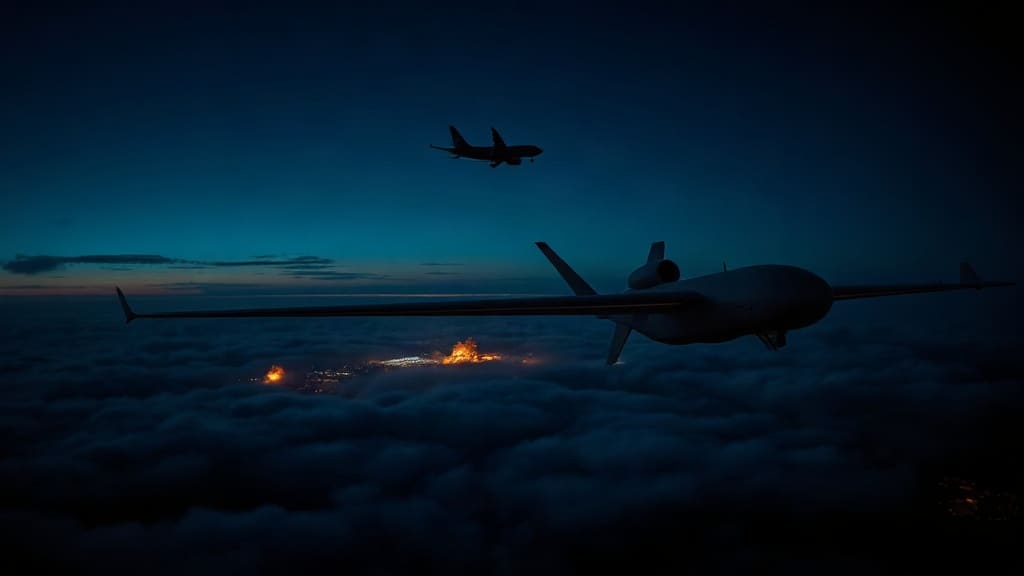
The war in Ukraine has already redrawn the map of global aviation, forcing carriers to reroute around closed airspace and rethink long-haul flight paths. Now, President Volodymyr Zelensky is turning up the pressure on airlines still using Russian airspace, warning that Ukraine's expanding drone campaign is turning the skies over Russia into a riskier place for commercial jets.
In a recent statement, Zelensky said airlines should avoid Russian airspace altogether. His warning comes as Ukraine has intensified long-range drone operations targeting military and strategic infrastructure deep inside Russian territory. The message is clear: the airspace above Russia is no longer a safe corridor, and airlines that keep using it are playing with fire.
Why Zelensky's Warning Matters for Global Aviation
Since Russia's full-scale invasion of Ukraine in February 2022, Western airlines have largely avoided Russian airspace due to sanctions, safety concerns, and reciprocal airspace bans. However, many carriers from China, the Gulf states, and some other countries continue to fly over Russia, benefiting from shorter routes and lower fuel costs. Zelensky's appeal is aimed squarely at these airlines, urging them to reconsider the risks.
The Ukrainian leader's warning is not just political rhetoric. Ukraine has been developing and deploying long-range drones capable of striking targets hundreds of kilometers inside Russia. As these operations escalate, the risk of accidental encounters between commercial aircraft and military drones or air defense systems increases. Even a single misidentification could have catastrophic consequences.
The Growing Drone Threat Over Russian Skies
Ukraine's drone program has evolved rapidly. From small quadcopters used for reconnaissance to larger, fixed-wing drones with explosive payloads, Ukrainian forces have demonstrated the ability to hit airfields, oil refineries, and ammunition depots far from the front lines. Some of these drones fly at altitudes and speeds that could intersect with commercial flight paths.
Russia's air defense systems, meanwhile, are on high alert. The country has deployed a dense network of surface-to-air missiles and radar systems to counter drone attacks. In such an environment, the risk of a civilian aircraft being mistaken for a hostile drone, or being caught in the crossfire, is not theoretical. The downing of Malaysia Airlines Flight MH17 in 2014 over eastern Ukraine remains a stark reminder of what can happen when military conflict and civilian aviation mix.
Which Airlines Still Fly Over Russia?
Despite the dangers, a significant number of airlines continue to use Russian airspace. Chinese carriers such as Air China, China Eastern, and China Southern regularly overfly Russia on routes between Asia and Europe. Gulf carriers like Emirates, Qatar Airways, and Etihad also use Russian airspace for many flights, as do Turkish Airlines and some Indian carriers. These airlines have cited operational efficiency and cost savings as reasons for maintaining their routes.
Zelensky's call is unlikely to immediately change the policies of these airlines, which are guided by their own governments' regulations and commercial interests. However, the warning adds to a growing chorus of voices highlighting the risks. Aviation safety experts have repeatedly urged airlines to avoid conflict zones, and the situation in Russia is increasingly resembling a conflict zone in the skies.
The Economic and Operational Stakes
For airlines, flying over Russia is not just about safety. It is also about economics. Russian airspace offers the most direct routes between Europe and East Asia, saving fuel and time. Rerouting around Russia adds hours to flight times and significantly increases operating costs. For airlines already squeezed by high fuel prices and intense competition, the Russian shortcut is hard to give up.
But the cost-benefit calculus may be shifting. If Ukraine's drone operations continue to escalate, the risk of a serious incident grows. Insurance premiums for flights over Russia could rise, and passengers may start avoiding airlines that take such risks. Zelensky's warning is a signal that the conflict is entering a new phase, one where the safety of civilian aviation over Russia can no longer be taken for granted.
How Ukraine's Drone Operations Are Changing the Battlefield
Ukraine's use of drones has become a defining feature of the war. From the early days of the invasion, when Turkish Bayraktar TB2 drones helped slow Russian advances, to the current campaign of deep strikes, drones have given Ukraine an asymmetric advantage. They allow Ukraine to hit targets far behind enemy lines without risking pilots, and they force Russia to dedicate significant resources to air defense.
The escalation Zelensky refers to includes attacks on military airfields, oil infrastructure, and command centers. Some of these targets are located near major cities and along flight corridors used by commercial airlines. The Ukrainian government has generally avoided targeting civilian infrastructure, but the nature of drone warfare means that accidents and misidentifications are always possible.
The MH17 Precedent and the Shadow It Casts
No discussion of civilian aviation over conflict zones is complete without remembering MH17. In July 2014, a Malaysia Airlines Boeing 777 was shot down over eastern Ukraine, killing all 298 people on board. An international investigation found that the aircraft was hit by a Russian-made Buk missile fired from territory controlled by Russian-backed separatists. The tragedy led to widespread changes in how airlines assess risk over conflict zones, but it also showed how quickly a routine flight can become a casualty of war.
Zelensky's warning is a direct appeal to prevent a repeat of that tragedy. By urging airlines to avoid Russian airspace, he is asking them to learn from history and prioritize safety over convenience. The message is especially pointed for airlines from countries that have maintained closer ties with Russia, but it applies to all carriers still flying over the country.
What Happens Next?
It remains to be seen whether Zelensky's warning will lead to any immediate changes. Airlines are slow to alter routes without clear regulatory guidance or a direct threat. However, the warning could influence public opinion and put pressure on airlines to justify their continued use of Russian airspace. Passengers may start to ask questions about the routes their flights take, and travel advisories could be updated to reflect the growing risk.
In the meantime, Ukraine's drone operations are unlikely to slow down. As the war grinds on, both sides are looking for new ways to gain an advantage. For Ukraine, drones offer a way to strike deep into Russian territory and disrupt the enemy's war effort. For Russia, the challenge is to defend against these attacks without endangering civilian aircraft. It is a delicate balance, and one that could tip at any moment.
Frequently Asked Questions
Why is Zelensky telling airlines to avoid Russian airspace?
Zelensky is warning airlines because Ukraine's drone operations over Russia have increased the risk of accidental encounters between civilian aircraft and military drones or air defense systems. He believes the airspace is no longer safe for commercial flights.
Which airlines still fly over Russia?
Many airlines from China, the Gulf states, Turkey, and India continue to use Russian airspace for flights between Europe and Asia. These include Air China, Emirates, Qatar Airways, Turkish Airlines, and Air India, among others.
Has a commercial plane ever been shot down over a conflict zone?
Yes. The most notable recent example is Malaysia Airlines Flight MH17, which was shot down over eastern Ukraine in 2014, killing all 298 people on board. The tragedy led to stricter risk assessments for flights over conflict areas.
What are the risks of flying over Russia right now?
The main risks include the possibility of a civilian aircraft being mistaken for a drone and shot down, being caught in crossfire between air defense systems and drones, or being affected by electronic warfare that disrupts navigation and communication systems.
Will airlines actually stop flying over Russia?
It is unlikely that all airlines will stop immediately, as many are motivated by cost savings and shorter routes. However, if the risk continues to rise, some airlines may reconsider their policies, especially if insurance costs increase or passengers demand safer routes.