
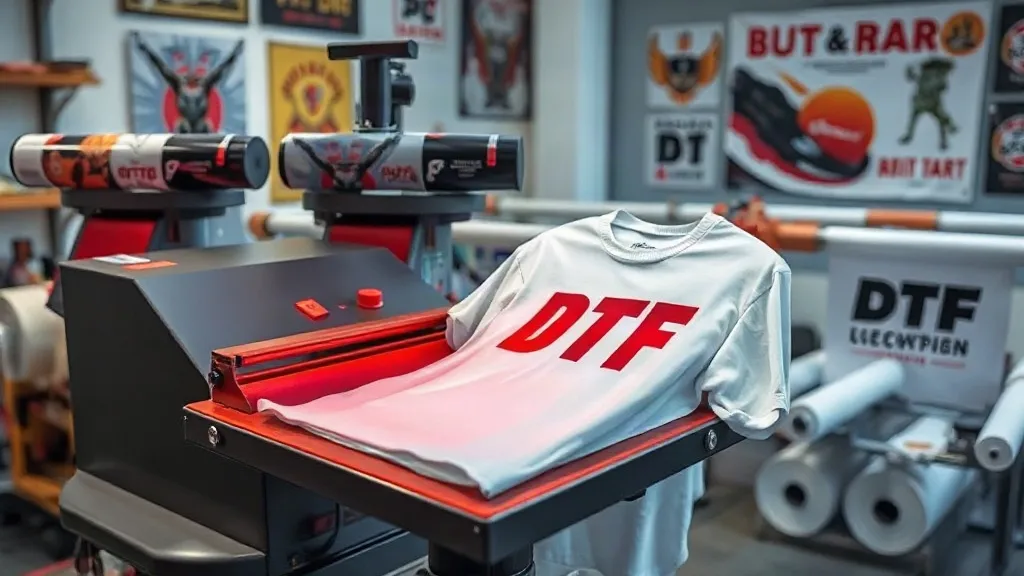
Imagine walking into a room wearing a t-shirt that perfectly captures your personality, a design you created yourself, with colors so vibrant they seem to pop off the fabric. That's the magic of dtf transfers. Unlike traditional printing methods that limit your creativity, DTF (Direct to Film) technology opens up a world of possibilities for custom apparel. Whether you're a small business owner looking to offer unique products, a hobbyist wanting to personalize your wardrobe, or someone exploring print-on-demand, understanding DTF transfers can transform your approach to fabric printing.
What Are DTF Transfers?
DTF stands for Direct to Film. It's a printing process where your design is printed onto a special film, then coated with a adhesive powder and cured. The resulting transfer can be applied to various fabrics using a heat press. Unlike DTG (Direct to Garment) which prints directly onto the fabric, DTF transfers allow you to print on a wide range of materials, including cotton, polyester, blends, and even nylon. This versatility makes dtf transfers a game-changer for anyone in the custom apparel industry.
The process involves several steps: designing your artwork, printing it onto the film with specialized inks, applying the powder, and curing it. Once prepared, the transfer is placed on the fabric and pressed with heat for a set time. The result is a durable, stretchable print that feels soft to the touch and withstands repeated washing.
Why Choose DTF Transfers Over Other Printing Methods?
If you've explored custom printing before, you might have encountered screen printing, heat transfer vinyl (HTV), or DTG. Each has its merits, but DTF transfers offer a unique combination of benefits that set them apart.
Unmatched Versatility
DTF transfers work on almost any fabric. Cotton, polyester, silk, leather, and even wood can be decorated. This means you're not limited to certain garment types; you can print on t-shirts, hoodies, caps, tote bags, and more. For businesses, this means offering a wider product range without investing in multiple printing technologies.
Vibrant Colors and Fine Details
DTF printing uses CMYK plus white ink, allowing for full-color designs with gradients, photographs, and intricate details. The white ink acts as a base, making colors pop on dark fabrics. Unlike screen printing, there's no need to create separate screens for each color, which reduces setup costs and time.
Durability and Stretchability
Properly applied DTF transfers are highly durable. They resist cracking, peeling, and fading, even after many washes. The prints also stretch with the fabric, making them ideal for performance wear and stretchy materials. This durability ensures your custom apparel maintains its professional look over time.
Cost-Effective for Small and Large Runs
DTF transfers are cost-effective for both small and large orders. There's no minimum order quantity, so you can print one-off designs or bulk orders with equal ease. The lack of setup fees (like screen charges) makes it accessible for startups and individuals.
How to Apply DTF Transfers: A Step-by-Step Guide
Applying DTF transfers is straightforward, but following the correct steps ensures a professional finish. Here's what you need to know.
What You'll Need
- A heat press (or an iron with careful technique)
- Your DTF transfer
- The garment or fabric
- Parchment paper or a Teflon sheet
- Heat-resistant gloves (optional)
Step 1: Prepare Your Workspace
Set up your heat press on a sturdy, heat-resistant surface. Preheat the press to the recommended temperature, typically between 325°F and 350°F (160°C to 175°C). The exact settings depend on your transfer and fabric, so always check the instructions provided with your transfers.
Step 2: Position the Transfer
Place your garment on the press. If it's wrinkled, press it for a few seconds to smooth it out. Then, position the DTF transfer with the printed side facing up (the design should be readable). Use heat-resistant tape if needed to keep it in place.
Step 3: Press and Apply
Cover the transfer with parchment paper or a Teflon sheet to protect your press. Apply medium to firm pressure for 10 to 15 seconds. The exact time can vary, so refer to your transfer's instructions. After pressing, allow the garment to cool completely before peeling off the film. For a matte finish, peel while hot; for a glossy finish, wait until cold. Most DTF transfers are cold peel, but always confirm.
Step 4: Post-Press (Optional)
For added durability, you can press the design again for a few seconds after peeling, using the parchment paper as a cover. This ensures the adhesive fully bonds with the fabric.
Common Mistakes to Avoid with DTF Transfers
Even though DTF transfers are forgiving, some pitfalls can ruin your results. Here are mistakes to watch out for.
- Incorrect temperature: Too low and the transfer won't adhere; too high and it may scorch the fabric or melt the film.
- Insufficient pressure: Without enough pressure, the design won't bond properly, leading to premature peeling.
- Peeling too early or too late: Follow the recommended peel method (hot vs. cold) for your specific transfer.
- Not pre-pressing the garment: Moisture or wrinkles can cause uneven adhesion.
- Using the wrong fabric: While DTF works on many materials, some fabrics like certain nylons may require lower temperatures.
DTF Transfers vs. Other Printing Methods: A Comparison
To help you decide if DTF is right for your project, let's compare it to common alternatives.
DTF vs. Screen Printing
Screen printing is cost-effective for large orders of simple designs with few colors. However, it requires setup for each color, making small runs expensive. DTF excels in full-color, detailed designs and small batches, with no setup costs.
DTF vs. DTG
DTG prints directly onto cotton fabrics, offering a soft feel. But it struggles with polyester and dark colors often require pre-treatment. DTF works on more fabrics and produces vibrant colors on dark materials without pre-treatment.
DTF vs. HTV
HTV (heat transfer vinyl) is great for simple, single-color designs and numbers. It's not suitable for complex, multi-color images. DTF handles intricate designs with gradients and photos effortlessly.
Applications of DTF Transfers
DTF transfers are used in various industries and personal projects. Here are some popular applications.
- Custom T-shirts and Hoodies: Perfect for personalizing apparel for events, teams, or resale.
- Sportswear and Activewear: The stretchability makes DTF ideal for jerseys, leggings, and performance gear.
- Corporate Uniforms: Add logos and names to workwear with professional quality.
- Promotional Products: Tote bags, caps, and mousepads can be customized for branding.
- Home Decor: Pillows, blankets, and curtains can feature custom designs.
Tips for Getting the Best Results with DTF Transfers
To ensure your DTF transfers look great and last long, follow these tips.
- Choose high-quality transfers: Not all DTF transfers are created equal. Source from reputable suppliers who use quality inks and films.
- Test on scrap fabric: Before pressing your final garment, test a small piece to dial in temperature, pressure, and time.
- Store transfers properly: Keep unused transfers in a cool, dry place away from direct sunlight to prevent the adhesive from curing prematurely.
- Wash garments inside out: To prolong the life of your print, wash in cold water and tumble dry low or hang dry.
- Use a professional heat press: While irons can work, a heat press provides consistent pressure and temperature for professional results.
Frequently Asked Questions About DTF Transfers
How long do DTF transfers last?
With proper application and care, DTF transfers can last as long as the garment itself. They withstand dozens of washes without fading or cracking. Following washing instructions like cold water and inside-out drying will maximize longevity.
Can I use DTF transfers on dark fabrics?
Absolutely. DTF transfers include a white ink layer that allows colors to stand out on dark fabrics. This is one of the key advantages over DTG printing, which often requires a white base for dark shirts.
Do I need a special printer to make DTF transfers?
Yes, DTF printing requires a specialized printer that uses DTF inks and films, along with a powder shaker and curing oven. However, you can purchase pre-made DTF transfers from suppliers if you don't want to invest in the equipment.
What fabrics work best with DTF transfers?
DTF transfers adhere well to cotton, polyester, cotton-poly blends, nylon, and even leather. They are not recommended for fabrics with heavy coatings or finishes that repel adhesives, such as some water-resistant materials.
Can I stretch the garment after applying a DTF transfer?
Yes, DTF transfers are stretchable and will move with the fabric without cracking. This makes them ideal for activewear and stretchy materials. However, avoid over-stretching immediately after application; allow the transfer to cool completely first.
Final Thoughts
DTF transfers have quickly become a favorite among custom apparel creators for their versatility, vibrant results, and ease of use. Whether you're printing a single shirt for yourself or launching a clothing line, DTF technology offers a reliable and cost-effective solution. By understanding the process, avoiding common mistakes, and following best practices, you can achieve professional-quality prints that impress. So why not give DTF transfers a try? Your creativity is the only limit.