
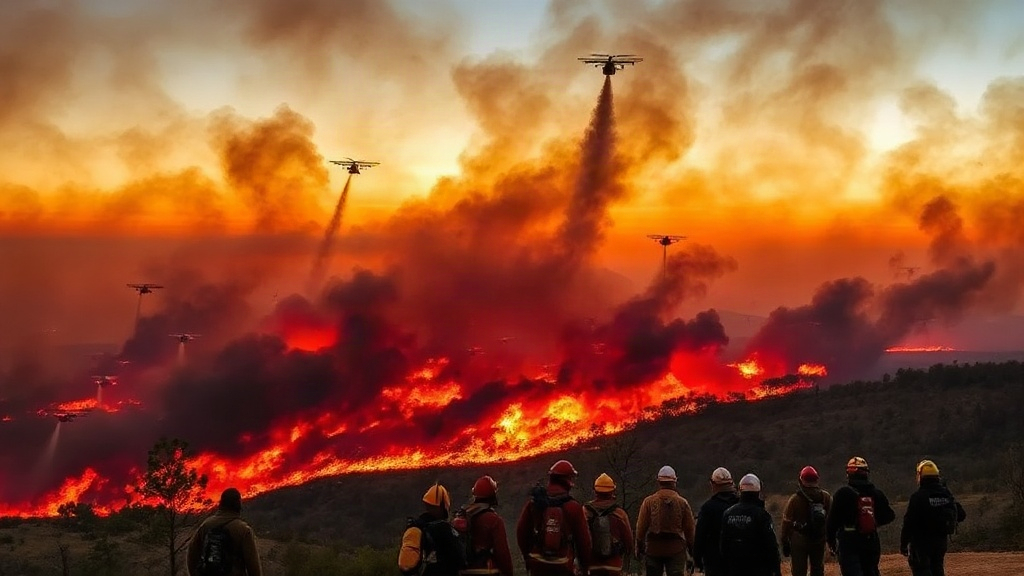
On a hot July afternoon, a small village in central Portugal watched helplessly as flames raced down a hillside toward their homes. Within hours, the fire had jumped valleys and crossed into Spain. Local crews were overwhelmed. But help didn't just come from the next town over. It came from France, Italy, and even as far away as Sweden. This is the new reality of European wildfires, and it has forced a fundamental shift in how the continent thinks about fighting them.
For decades, wildfire response was strictly a national matter. Each country had its own planes, its own ground crews, and its own protocols. When a big fire broke out, neighbors might lend a hand informally, but there was no formal system for moving resources quickly across borders. That changed as fires grew larger, hotter, and more frequent. Climate change, rural abandonment, and the buildup of flammable vegetation have turned what was once a seasonal nuisance into a year-round emergency. Today, the European Union is playing an increasingly central role in coordinating firefighting efforts across the continent. It is not just about sending planes; it is about building a shared capacity to face a shared threat.
The Growing Threat of European Wildfires
Europe has always had wildfires, especially in the Mediterranean region. But the scale and intensity of recent fires are unprecedented. Greece, Portugal, Spain, France, and Italy have all experienced massive blazes in recent years that destroyed homes, claimed lives, and scorched hundreds of thousands of hectares. In 2023, a single fire in Greece became the largest ever recorded in the EU, burning an area larger than New York City. The fire season is also starting earlier and ending later, with blazes now occurring in countries that rarely saw them before, such as Germany, Poland, and even Sweden.
Several factors are driving this change. Climate change is the biggest one. Hotter temperatures, longer droughts, and stronger winds create ideal conditions for fires to ignite and spread. At the same time, many rural areas have been depopulated as people move to cities. The terraced fields and grazing lands that once kept forests open and less flammable have been abandoned, allowing dense brush and trees to take over. Add in an increase in human-caused ignitions, from power lines to careless behavior, and you have a recipe for disaster.
The result is that no single country can always cope on its own. When a fire explodes in size, local resources are quickly exhausted. Water-dropping aircraft, which are expensive and in short supply, are often the first thing nations need. But they are only part of the equation. Trained ground crews, incident commanders, and specialized equipment are also critical. This is where European cooperation has become essential.
From Ad Hoc Help to a Permanent System
The European Union's involvement in firefighting began modestly. In the early 2000s, the EU started providing funding for member states to purchase firefighting aircraft, but the planes remained under national control. When a country needed help, it would request assistance through informal channels or the EU's Civil Protection Mechanism, which was created in 2001 to coordinate responses to all kinds of disasters, not just fires. The mechanism allowed any country, inside or outside the EU, to ask for help, and member states could offer what they had. But it was voluntary and often slow.
After a series of catastrophic fire seasons in the late 2010s, it became clear that the system needed to change. Countries were hesitant to send their own planes and crews abroad because they might need them at home. There was no central stockpile of equipment or predictable funding. In 2019, the EU took a major step by creating rescEU, a reserve of firefighting assets fully funded by the European Commission. For the first time, the EU itself could purchase or lease aircraft and helicopters that would be stationed in strategic locations and deployed quickly when a member state was overwhelmed.
RescEU started with a few planes and helicopters, but it has grown rapidly. The fleet now includes dozens of aircraft, including Canadair water bombers and heavy-lift helicopters. These assets are not owned by any single country; they are managed by the EU and can be sent wherever they are needed most. The program also funds the prepositioning of ground crews and vehicles in high-risk areas before the fire season peaks. This means that when a fire breaks out in Greece, there may already be French firefighters on the ground, ready to assist from day one.
How the System Works Today
When a country faces a wildfire that exceeds its own capacity, it can request assistance through the EU's Emergency Response Coordination Centre (ERCC) in Brussels. The ERCC operates 24/7 and acts as a clearinghouse for offers of help. It can also tap directly into the rescEU reserve. The goal is to get resources on the scene within hours, not days. In many cases, aircraft are already prepositioned in the requesting country or a neighboring one, so they can be airborne within minutes of a request.
The system is not just about hardware. The EU also funds training and exercises to ensure that firefighters from different countries can work together seamlessly. They learn common terminology, standard operating procedures, and how to coordinate air and ground operations across language barriers. This is crucial because a Portuguese incident commander may suddenly find himself directing a team of Polish firefighters and a Swedish helicopter pilot. Without prior training, such a mix could be chaotic. With it, it can be highly effective.
Another key element is the European Forest Fire Information System (EFFIS), which provides real-time data on fire danger, active fires, and burned areas. This helps national authorities plan their responses and allows the EU to anticipate where resources will be needed. EFFIS uses satellite data and weather models to produce daily fire risk maps, which are shared with all member states. This intelligence-driven approach is a far cry from the old days of reacting to fires after they were already out of control.
Challenges and Limits of European Cooperation
Despite the progress, the European firefighting system faces significant challenges. The biggest one is funding. RescEU relies on the EU budget, which is negotiated every seven years. While the program has received substantial increases, it is still far smaller than what experts say is needed. The cost of a single large air tanker can exceed 30 million euros, and operating costs are high. There is also competition for resources with other emergencies, such as floods and earthquakes.
Another challenge is the mismatch between the scale of the problem and the available assets. Even with the rescEU fleet, there are not enough planes and helicopters to fight multiple large fires simultaneously across the continent. When fires rage in Greece, Portugal, and France at the same time, the system is stretched thin. This has led to calls for a much larger permanent EU firefighting force, but that would require a significant increase in spending and political will.
There is also the question of sovereignty. Some member states are wary of giving the EU too much control over what they see as a national responsibility. They worry that a centralized system might be slower to respond to local needs or that their own citizens might be left unprotected if assets are sent elsewhere. These concerns are valid, but the reality is that fires do not respect borders, and a coordinated response is often the only effective one.
The Human Dimension: Firefighters on the Front Lines
Behind the politics and the budgets are the men and women who actually fight the fires. Their experiences highlight both the value and the limits of European cooperation. A Greek firefighter who worked alongside a German crew during the 2023 fires said the extra hands made a huge difference, but he also noted the difficulty of coordinating in the chaos of a fast-moving blaze. "There is no time for long briefings," he said. "You have to trust the system and each other."
Training programs funded by the EU have helped build that trust. Firefighters from different countries now regularly train together, learning not just technical skills but also how to communicate and make quick decisions in a multicultural team. This is a quiet but crucial part of the European project. It is one thing to send a plane; it is another to ensure that the people on the ground can work as a single unit.
There are also stories of remarkable solidarity. During the 2022 fire season, when France was hit hard, firefighters from Romania, Poland, and Austria arrived to help. Many of them had never seen fires of that intensity before. They left their families for weeks, sleeping in tents and working 16-hour days. Their presence was a powerful reminder that European cooperation is not just about institutions; it is about people helping people.
What the Future Holds
The European Union's role in firefighting is likely to grow. Climate projections suggest that the fire season will lengthen and intensify across the continent. Southern Europe will remain the epicenter, but new areas in Central and Northern Europe will also face increased risk. This means the demand for cross-border assistance will rise, and the current system will need to expand to meet it.
One area of focus is prevention. The EU is increasingly funding projects that aim to reduce fire risk before fires start. This includes forest management, creating firebreaks, and promoting fire-resistant landscaping. The idea is to shift from a purely reactive approach to a more proactive one. After all, the best way to fight a fire is to prevent it from starting or to stop it while it is still small.
Another development is the use of technology. Drones, artificial intelligence, and better satellite monitoring are being integrated into firefighting operations. The EU is investing in research to improve fire behavior modeling and early warning systems. These tools can help firefighters make better decisions and save lives.
Perhaps most importantly, there is a growing recognition that wildfires are not just a southern European problem. They are a European problem. A fire in Portugal can affect air quality in Germany, disrupt tourism in Spain, and strain the budgets of all member states. The European Union was founded on the idea that cooperation is stronger than isolation. In the fight against wildfires, that idea is being tested and, so far, it is holding.
Frequently Asked Questions
How does the EU coordinate firefighting across countries?
The EU uses its Emergency Response Coordination Centre (ERCC) in Brussels to receive requests for help and match them with offers from member states or the rescEU reserve. The ERCC operates around the clock and can deploy aircraft, ground crews, and equipment within hours. It also coordinates prepositioning of resources in high-risk areas before fires break out.
What is rescEU and how does it work?
RescEU is a European Commission-funded reserve of firefighting assets, including aircraft and helicopters. These assets are not owned by any single country and can be deployed wherever they are needed in the EU. The program has grown significantly since its launch in 2019 and now includes dozens of planes and helicopters stationed across the continent.
Why are wildfires getting worse in Europe?
Climate change is the main driver, bringing hotter temperatures, longer droughts, and stronger winds. Rural abandonment has also increased fuel loads, as unmanaged land becomes overgrown. Additionally, human activities, such as power lines and careless behavior, start many fires. These factors combine to create more frequent and intense wildfires.
Which European countries are most affected by wildfires?
Southern European countries like Greece, Portugal, Spain, France, and Italy are most affected due to their hot, dry summers and flammable vegetation. However, fires are increasingly occurring in Central and Northern Europe, including Germany, Poland, and Sweden, as climate change alters fire regimes across the continent.
Can the EU's firefighting system handle multiple large fires at once?
Currently, the system can be stretched thin when several large fires burn simultaneously. While rescEU has expanded, there are still not enough aircraft and crews to cover every emergency at once. This is a key challenge, and there are calls for a larger permanent EU firefighting force to address it.