
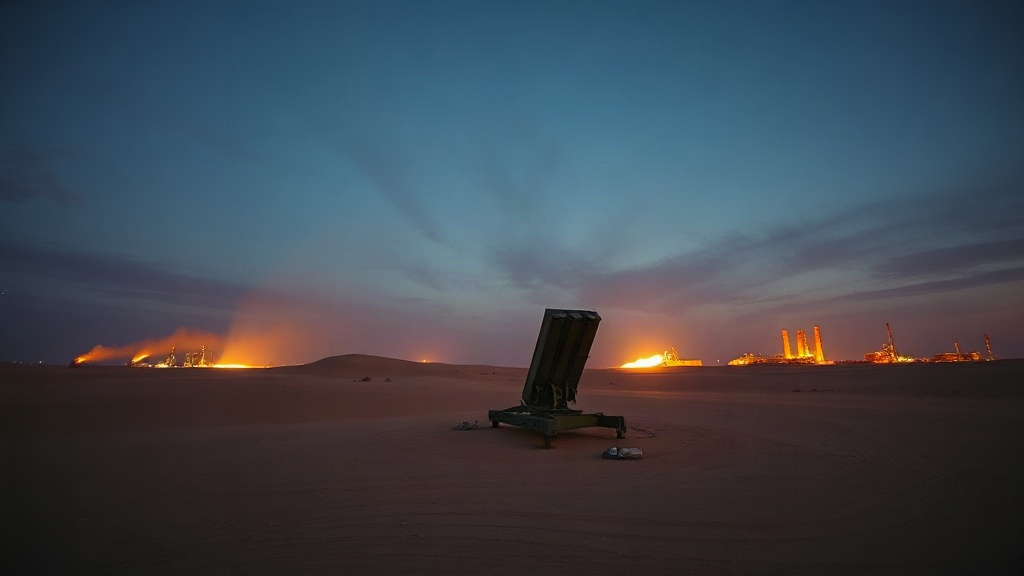
In a move that underscores Washington's enduring security ties with its Gulf partners, the United States has reportedly dispatched two additional Patriot missile defense batteries to Saudi Arabia and Qatar in recent weeks. The deployment, confirmed by two U.S. officials and a regional source, aims to reinforce the protection of critical oil and gas infrastructure against potential Iranian retaliation. While the Pentagon has not publicly announced the move, it reflects a calculated effort to reassure allies wary of escalating hostilities with Tehran.
Why the Additional Patriots Matter
The Patriot system, renowned for its ability to intercept tactical ballistic missiles, cruise missiles, and aircraft, forms the backbone of air defense for many Gulf states. By sending extra batteries, the U.S. is effectively doubling down on its commitment to safeguard the lifeblood of the global energy market. Saudi Arabia and Qatar host some of the world's largest oil and natural gas facilities, including Saudi Aramco's Abqaiq processing plant and Qatar's North Field, the largest natural gas field on the planet. Any disruption there would send shockwaves through international markets, driving prices skyward and destabilizing economies far beyond the region.
The timing is telling. The deployments come as President Trump has publicly hinted at the possibility of resuming major combat operations against Iran. In a statement on Thursday, Trump said he is considering renewing a bombing campaign in the coming weeks, adding that Iran must choose between negotiating a deal or facing severe consequences. Although the President's rhetoric is characteristically blunt, it signals that the White House is keeping all options on the table, including military strikes on Iranian energy infrastructure.
Background: A History of Gulf Anxieties
Tensions between the U.S. and Iran have simmered for decades, but they reached a boiling point in early August when Trump weighed launching a massive attack that would have included strikes on Iranian energy targets. According to U.S. officials, the leaders of both Saudi Arabia and Qatar lobbied intensely against such a move, expressing grave concern that Iran would retaliate by targeting their own oil and natural gas facilities. Their pleas, officials say, were a key reason Trump ultimately decided to hold back and instead pivot toward an economic pressure campaign.
That episode laid bare a fundamental dilemma for Gulf monarchies: they want the U.S. to counter Iranian aggression, but they fear becoming the primary battleground in a direct confrontation. The additional Patriot batteries are a tangible reassurance that Washington will not abandon them if the situation escalates. At the same time, the deployment could be seen as a signal to Iran that any attack on Gulf energy infrastructure would be met with a robust defense, potentially raising the stakes for Tehran.
Strategic Implications for the Region
The reinforcement of air defenses in Saudi Arabia and Qatar carries several layers of strategic significance. First, it demonstrates that the U.S. remains deeply engaged in Gulf security even as it grapples with challenges elsewhere, such as the war in Ukraine and competition with China. Second, it sends a message to other regional players, including the United Arab Emirates and Bahrain, that American security guarantees are credible. Third, it complicates Iran's calculus, as any attempt to strike Gulf energy sites would now face a denser defensive shield.
However, the move is not without risks. Iran could interpret the deployments as a provocation, accelerating its own missile development or prompting proxy attacks against U.S. assets in the region. Moreover, the Patriots are not a panacea; they can be overwhelmed by saturation attacks, and their presence does not guarantee absolute protection. Yet, in the realm of deterrence, perception often matters as much as capability. By visibly bolstering defenses, the U.S. hopes to dissuade Iran from testing the limits of its aggression.
What This Means for Global Energy Markets
For global energy markets, the deployment is a double-edged sword. On one hand, it reduces the risk of a catastrophic supply disruption, which should help stabilize prices. On the other hand, it underscores the persistent volatility in the Middle East, a factor that traders cannot ignore. Any hint of military escalation tends to inject a risk premium into oil prices, and the latest news is unlikely to be an exception. Consumers and businesses worldwide should brace for continued uncertainty, as the standoff between Washington and Tehran shows no signs of abating.
Analysts also note that the U.S. is walking a fine line between deterrence and entrapment. While the Patriots enhance the defense of Gulf allies, they also tie American credibility to the security of those states. If Iran were to successfully strike a Saudi or Qatari energy facility despite the enhanced defenses, it would be a major blow to U.S. prestige and could force a more direct American response. Thus, the deployment is not just a defensive measure; it is also a statement of resolve.
Diplomatic Fallout and Regional Reactions
So far, neither Saudi Arabia nor Qatar has publicly commented on the additional Patriots, likely preferring to keep the arrangement low-key to avoid provoking Iran. However, behind the scenes, both governments are likely relieved by the reinforcement. Their lobbying in August demonstrated that they view U.S. military support as essential to their survival, even if they are reluctant to advertise it. Meanwhile, Iran has yet to respond officially, but its state media has previously warned that any foreign military buildup in the Gulf would be met with countermeasures.
The deployments could also affect ongoing diplomatic efforts. The Biden administration had been pursuing negotiations to revive the Iran nuclear deal, but those talks have stalled. The Trump administration's approach appears to be a mix of maximum pressure and military readiness, a combination that leaves little room for compromise. If Iran feels cornered, it might accelerate its nuclear program or lash out through proxies, further destabilizing the region.
Looking Ahead: A Fragile Balance
As the U.S. reinforces its Gulf presence, the coming weeks will be crucial in determining whether the standoff with Iran escalates or de-escalates. President Trump's decision on whether to resume bombing campaigns will hinge on multiple factors, including Iran's willingness to negotiate and the advice of his military commanders. The additional Patriots provide a safety net for Gulf allies, but they also raise the stakes. In this high-stakes game of brinkmanship, both sides are calculating their next move, aware that a miscalculation could ignite a conflict with global repercussions.
For now, the message from Washington is clear: the U.S. will defend its partners and their energy infrastructure. Whether that message deters Iran or provokes it remains to be seen. What is certain is that the Gulf region remains a tinderbox, and the latest deployments are a stark reminder of how quickly things could spiral out of control.
Frequently Asked Questions
What exactly are Patriot missile batteries and why are they being sent to Saudi Arabia and Qatar?
Patriot missile batteries are advanced air defense systems designed to intercept incoming ballistic missiles, cruise missiles, and aircraft. They are being sent to Saudi Arabia and Qatar to protect critical oil and gas facilities from potential Iranian attacks, especially as tensions with Tehran escalate.
How many additional Patriot batteries has the U.S. deployed, and when did this happen?
According to U.S. officials and a regional source, two additional Patriot batteries were deployed in recent weeks. The exact dates and locations have not been publicly disclosed for security reasons.
Why are Saudi Arabia and Qatar concerned about Iranian retaliation?
Both countries host massive energy infrastructure that is vital to the global economy. In the past, Iranian leaders have threatened to strike these facilities if attacked. Saudi and Qatari leaders fear that if the U.S. launches strikes on Iran, Tehran will retaliate against their oil and gas sites, causing severe economic damage.
What impact could these deployments have on oil prices?
The deployments could have a stabilizing effect on oil prices by reducing the perceived risk of supply disruptions. However, they also highlight ongoing geopolitical tensions, which can keep a risk premium on prices. Overall, markets may react with cautious optimism but remain sensitive to any escalation.
Is the U.S. preparing for a military confrontation with Iran?
The U.S. is keeping military options on the table, as indicated by President Trump's recent statements. However, the primary goal of the deployments is to deter Iran and reassure allies, not necessarily to provoke a conflict. The situation remains fluid, and diplomatic efforts continue alongside military preparations.