
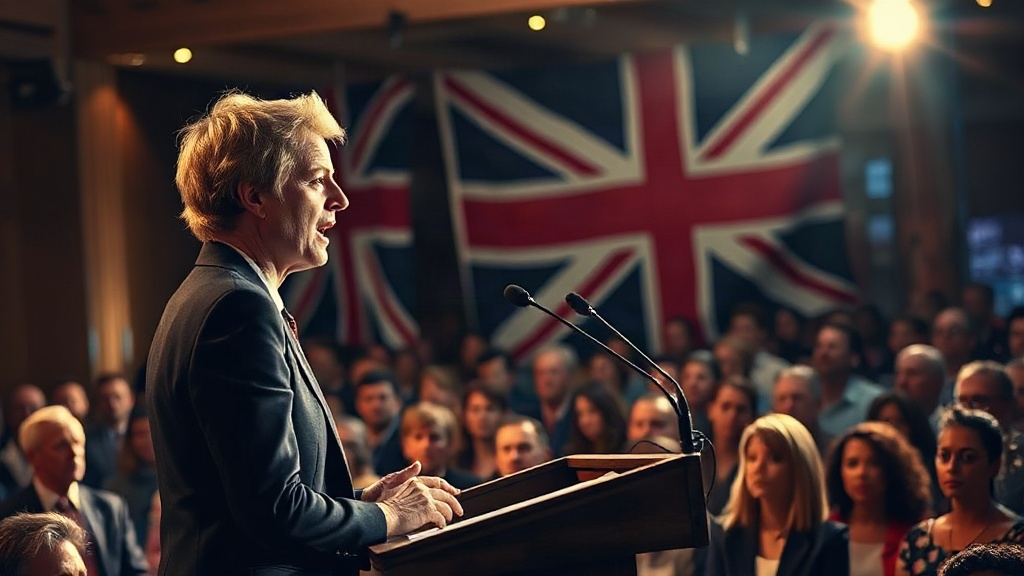
In a political landscape often defined by caution and incrementalism, Andy Burnham's latest conference speech was a thunderclap. The Labour mayor and former cabinet minister didn't just outline policies; he threw down a gauntlet, betting his political future on a set of radical progressive ideas that he believes can break Britain out of a 40-year cycle of stagnation and inequality. His message was clear: the old ways have failed, and only bold action can "allow us to rise again."
But this is a gamble, and Burnham knows it. In a candid moment, he admitted that his plan could be "difficult" and that he "may pay a political price" for creating sharp new dividing lines. So what exactly is he proposing, and why does it matter? More importantly, could this actually work, or is it a risky bet that could backfire spectacularly?
The Three Pillars of Burnham's Progressive Gamble
Burnham's vision rests on three interconnected pillars: social care, electoral reform, and Europe. Each represents a significant departure from the status quo, and together they form a cohesive, if contentious, platform.
1. Social Care: A National Care Service
For decades, social care has been the elephant in the room of British politics. Successive governments have promised reform, only to kick the can down the road. Burnham is proposing nothing less than a National Care Service, free at the point of use, funded through general taxation. This would mirror the NHS in its universalism and would finally address the catastrophic costs that force thousands of families to sell their homes each year to pay for care.
The implications are enormous. A fully funded care service would not only provide dignity for the elderly and disabled but also free up hospital beds, ease pressure on the NHS, and create hundreds of thousands of jobs. However, the price tag is eye-watering. Estimates suggest it could cost upwards of £50 billion a year. Burnham argues that this is a price worth paying, and that the current system is both morally bankrupt and economically inefficient. But convincing a tax-averse public is another matter.
2. Electoral Reform: Proportional Representation
Burnham has long been a critic of the UK's first-past-the-post (FPTP) system, arguing that it breeds apathy, entrenches two-party dominance, and fails to reflect the true diversity of public opinion. His plan includes a commitment to introducing proportional representation (PR) for general elections. This would be a seismic shift in British politics, potentially ending the era of single-party majority governments and ushering in a new age of coalitions and consensus-building.
Critics warn that PR could lead to unstable governments and give disproportionate power to smaller parties. But Burnham counters that it would revitalize democracy, making every vote count and forcing politicians to collaborate rather than confront. It's a bold move that could reshape the political landscape for generations.
3. Europe: A New Relationship
Brexit remains a divisive issue, but Burnham is unapologetic about his desire to rebuild ties with the EU. He advocates for a "long-term relationship" with Europe, including closer alignment on trade, security, and climate policy. While he stops short of calling for rejoining the single market or customs union, his stance is a clear rejection of the hard Brexit pursued by the Conservatives.
This is perhaps the most contentious pillar. Brexit supporters will see it as a betrayal, while pro-Europeans may argue it doesn't go far enough. But Burnham's calculation is that the economic damage of a hard Brexit is becoming increasingly apparent, and that a new generation of voters is less wedded to the old arguments. By offering a pragmatic, forward-looking vision, he hopes to win back those who feel left behind by the current government's approach.
Why This Matters: The Health of the Nation
At its core, Burnham's agenda is about health, not just of individuals but of society as a whole. The NHS is in crisis, social care is on its knees, and inequality is widening. These are not abstract problems; they affect real people every day. Burnham's plan is an attempt to address the root causes of these crises, rather than just treating the symptoms.
Take social care. The current system is means-tested and often forces people to sell their homes to pay for care. This causes immense stress and hardship. A National Care Service would remove that fear, providing security and dignity in old age. It would also help the NHS by reducing bed blocking and allowing hospitals to function more efficiently. Similarly, electoral reform and a new relationship with Europe are about creating a healthier democracy and economy, which in turn lead to better health outcomes.
Burnham's emphasis on these issues shows that he understands the interconnectedness of health and social policy. His gamble is that the public is ready for a holistic approach that tackles the big structural problems, rather than tinkering around the edges.
The Risks and Rewards
Every political gamble carries risks, and Burnham's is no exception. The most obvious risk is electoral backlash. The Conservatives will paint him as a tax-and-spend socialist who wants to bankrupt the country. The right-wing press will attack him relentlessly. And even within his own party, there will be those who fear that such a radical platform will scare off swing voters.
There's also the question of delivery. Even if Burnham wins the next election, implementing these policies would be a monumental challenge. The civil service, vested interests, and economic constraints could all water down or derail his plans. And if he fails to deliver, the disillusionment could be even greater than the hope he currently inspires.
Yet the rewards could be transformative. If Burnham succeeds, he could realign British politics for a generation. He could create a fairer, more caring society, with a thriving economy and a renewed sense of national purpose. He could inspire a new generation of voters who have given up on politics. And he could prove that bold, progressive policies are not only electable but also effective.
The stakes couldn't be higher. Burnham is betting that the British people are ready for change, and that they will reward courage over caution. It's a gamble that will define his career and possibly the future of the country. As he said in his speech, "allow us to rise again." Whether that happens or not, one thing is certain: the political debate in Britain has just been jolted awake.
Frequently Asked Questions
What is Andy Burnham's National Care Service?
It's a proposal to create a universal, free-at-the-point-of-use social care system in England, funded through general taxation, similar to the NHS. It aims to replace the current means-tested system that often forces people to sell their homes to pay for care.
Why is electoral reform part of Burnham's plan?
Burnham argues that the current first-past-the-post system is unfair and leads to apathy. He wants to introduce proportional representation to make every vote count and encourage coalition politics.
How would Burnham's plan affect the NHS?
By properly funding social care, the plan would reduce pressure on the NHS, freeing up hospital beds and allowing the health service to focus on acute care. It's part of a holistic approach to health and social care.
What are the chances of Burnham's plan being implemented?
It depends on whether he becomes prime minister and whether he can win support for his policies. The plan faces significant political and economic hurdles, but Burnham is betting that the public mood is shifting in favour of radical change.
How does Burnham's plan address Brexit?
Burnham advocates for a closer, long-term relationship with the EU, including alignment on trade, security, and climate. He stops short of rejoining the single market but seeks to mitigate the damage of a hard Brexit.