
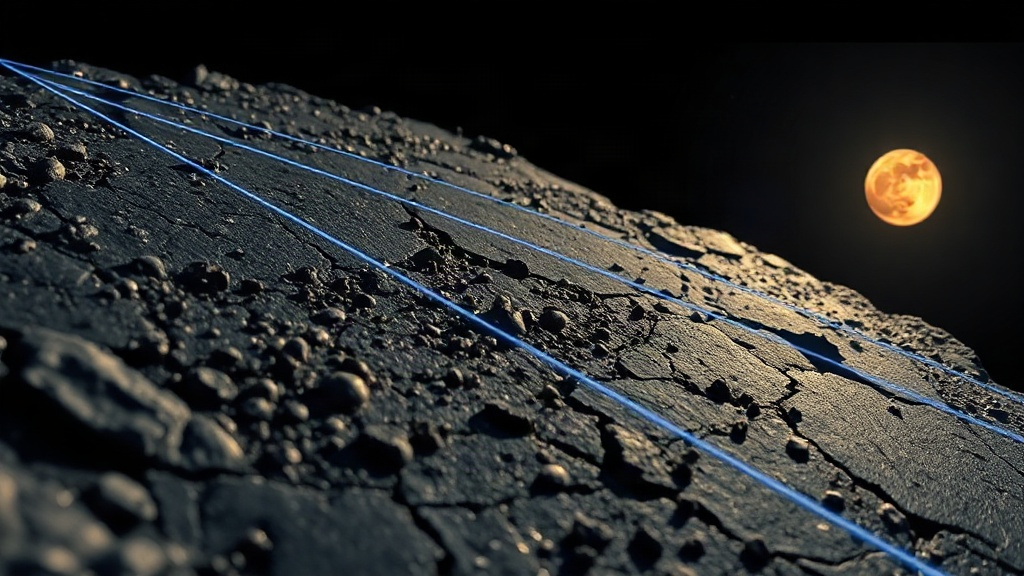
Step outside on a clear night and you might see a few thousand stars, but the solar system we call home began as a cold, diffuse cloud of gas and dust. For decades, scientists have debated what forces transformed that cloud into the sun and a spinning disk of planets. Now, a new study of some of the oldest known meteorites suggests that a surprisingly powerful magnetic field was at work within the first 200,000 years of the solar system's existence. The finding, published in a leading science journal, adds a crucial piece to the puzzle of how our cosmic neighborhood formed.
Unlocking Secrets in Ancient Grains
The meteorites in question are among the most primitive objects in our solar system. They contain tiny mineral grains that formed before the planets did, preserved in the cold vacuum of space for over 4.5 billion years. By analyzing the magnetization locked inside these grains, researchers can reconstruct the magnetic environment of the early solar nebula. It's like reading a fossil record, but instead of bones, the record is written in magnetic minerals.
In this latest work, a team of geophysicists and planetary scientists examined a specific type of meteorite known to contain some of the oldest dated material. Using highly sensitive magnetometers, they measured the remnant magnetization of individual grains. The results were striking: the magnetic field strength was far higher than many models had predicted for such an early epoch. This field, they argue, was not a minor player but a major force in the disk's evolution.
How Magnetism Helped Build the Solar System
To understand why this matters, consider the standard picture of solar system formation. A giant molecular cloud collapses under its own gravity, flattening into a rotating disk. The center becomes the sun, while the disk's dust and gas gradually clump together to form planets. But there's a problem: as dust particles orbit, they should drift inward and be swallowed by the sun before they can grow into planets. Something must have slowed or halted that inward migration.
That something, according to the new study, could be magnetism. A strong magnetic field can interact with the ionized gas in the disk, creating a sort of brake that prevents material from spiraling inward too quickly. It can also drive turbulence, which helps particles collide and stick together. In essence, magnetism may have worked alongside gravity, giving dust the time and conditions it needed to assemble into larger bodies.
Evidence from Meteorite Magnetism
The evidence comes from the fact that when magnetic minerals form, they align with the ambient magnetic field. Once locked in, that alignment can persist for billions of years, unless later heating or shock events erase it. The meteorites studied here appear to have escaped such resetting, making them reliable witnesses to the early disk. The measured field strength is consistent with a dynamo generated by the young sun or by turbulent motions in the disk itself.
This isn't the first time meteorites have hinted at ancient magnetism, but the new data push the clock back much further. Previous estimates suggested that a strong field didn't emerge until a few million years after the solar system's birth. The new timeline, with a robust field within the first 200,000 years, implies that magnetic processes were active almost from the very beginning.
Why This Matters for Planet Formation
If magnetism was indeed a key player, it changes how we model the birth of planetary systems. Many simulations of planet formation rely primarily on gravity and gas dynamics, with magnetism treated as a secondary effect. The new findings suggest that magnetism should be included from the start. This could help explain why some disks form planets efficiently while others don't, and why our solar system has the architecture it does.
Moreover, the results have implications for the search for other planetary systems. If strong magnetic fields are common in young disks, they could influence where and how planets form around other stars. Astronomers using radio telescopes to study protoplanetary disks might look for signatures of magnetic fields to better predict planet formation.
Connecting to Modern Observations
Today's telescopes, such as the Atacama Large Millimeter/submillimeter Array (ALMA), can map magnetic fields in disks around young stars. These observations show that magnetic fields are indeed present and can be quite strong. The ancient meteorite record provides a complementary view, giving a direct measurement of the field in our own solar system's infancy. Together, these lines of evidence are building a more complete picture.
The Bigger Picture: A Magnetic Solar System
It's easy to think of the solar system as a gravitational machine, with planets orbiting the sun in clockwork precision. But the new study reminds us that other forces were at play. Magnetism, often overlooked in the grand narrative of cosmic evolution, may have been a silent architect, shaping the disk and shepherding matter into the planets we know today.
This research also highlights the value of studying meteorites. These space rocks are not just curiosities; they are time capsules that preserve conditions from before Earth existed. Each new analysis adds a brushstroke to the portrait of our origins.
Frequently Asked Questions
What exactly did the ancient meteorites reveal?
The meteorites contain magnetic minerals that recorded a strong magnetic field in the solar system's first 200,000 years. This field was stronger than many expected, suggesting magnetism played a significant role in shaping the early solar nebula.
How do scientists measure ancient magnetic fields in meteorites?
They use sensitive instruments called magnetometers to detect the remnant magnetization of tiny mineral grains. When these grains formed, their magnetic moments aligned with the ambient field. By measuring that alignment, researchers can estimate the field's strength and direction at the time of formation.
Why is this discovery important for understanding planet formation?
It suggests that magnetic forces worked alongside gravity to prevent dust from falling into the sun too quickly and to help particles clump together. This could explain how planets had enough time to form. It also means that models of planet formation need to include magnetism more seriously.
Could this magnetic field have affected the formation of Earth?
Yes, if the field was present throughout the disk, it would have influenced the region where Earth eventually formed. It could have affected the distribution of material and the timing of planetesimal accretion. However, more research is needed to connect the global field to specific local effects.
What are the next steps for this research?
Scientists plan to study more meteorites with different origins to see if the strong field was widespread. They also want to refine theoretical models to incorporate magnetic effects more accurately. Future observations of other protoplanetary disks will help test whether this is a common phenomenon.